
2.5 KiB
| title | tags | categories | |||
|---|---|---|---|---|---|
| if not IsEmpty then FindSet |
|
|
Created by SosicStefan, Described by SosicStefan
Introduction
When retrieving records in Business Central, a common pattern is using IsEmpty before calling FindSet to check whether data exists. However, this approach is redundant and can lead to unnecessary database queries. Business Central’s runtime already optimizes FindSet to avoid unnecessary retrieval operations.
Why Not Use 'If Not IsEmpty Then FindSet'?
The following pattern:
if not Customer.IsEmpty() then
    Customer.FindSet();
This introduces inefficiencies due to:
- Redundant checks: Business Central internally wraps FindSet in an IF EXISTS query when repeated on platform level itself.
- Extra queries: Calling IsEmpty separately can lead to duplicate execution of SELECT TOP 1 NULL, slowing down performance.
How Business Central Optimizes FindSet
Consider the following loop:
internal procedure IsEmptyAndFindSet()
var
    Customer: Record Customer;
    i: Integer;
begin
    for i := 1 to 10 do begin
        Customer.SetRange("Country/Region Code", 'RS');
        if not Customer.IsEmpty() then
            Customer.FindSet();
    end;
end;
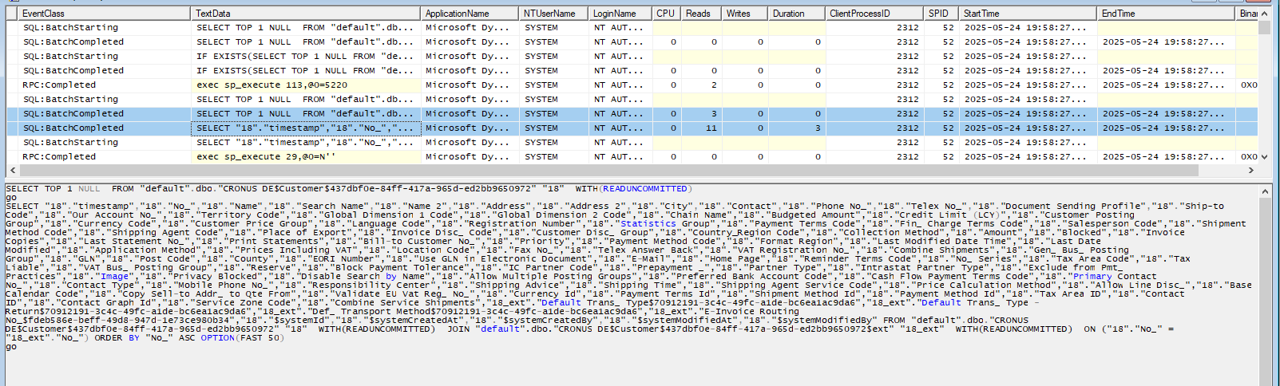
With this code being executed, Business Central will run two queries on SQL:
- One for checking
IsEmpty - Second for getting dataset with
FindSet
Best Practice: Use FindSet Directly
Instead of checking IsEmpty first, simply use only FindSet:
internal procedure FindSetWithoutIsEmpty()
var
    Customer: Record Customer;
    i: Integer;
begin
    for i := 1 to 10 do begin
        Customer.SetRange("Country/Region Code", 'RS');
        if Customer.FindSet() then;
    end;
end;
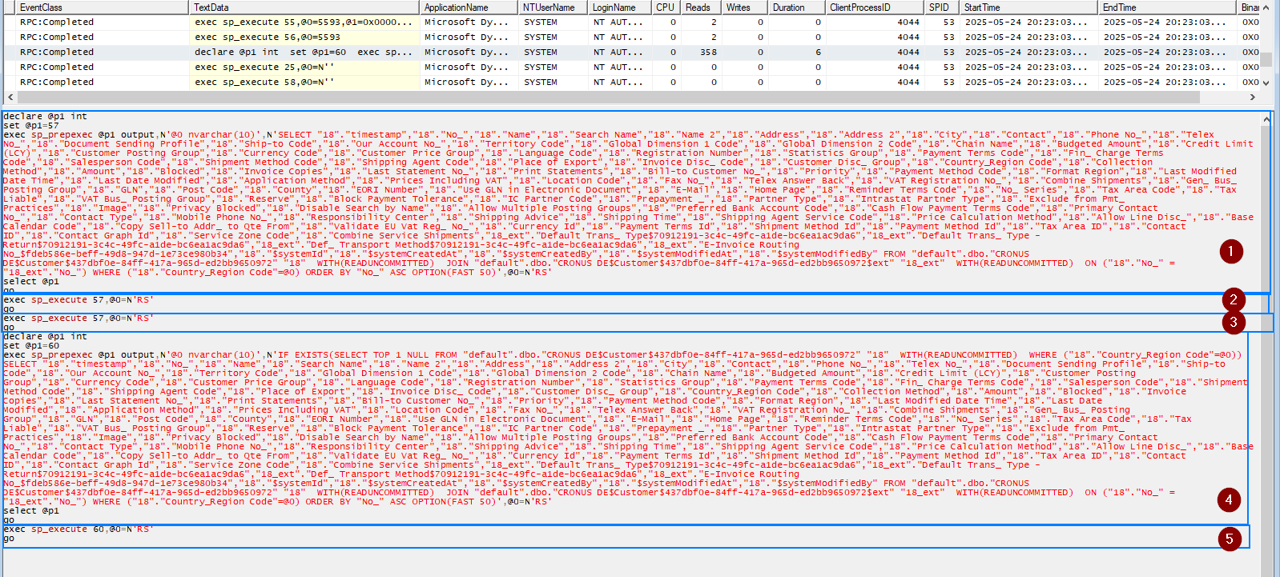
Initially, Business Central runs a normal SELECT query to retrieve the data.
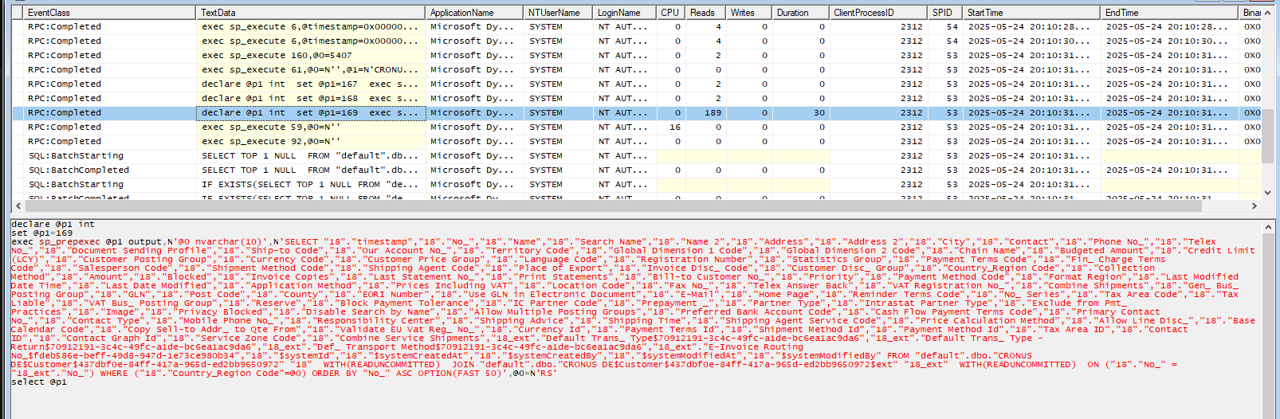
However, after running this query for three times, on fourth time the system switches to an optimized query:
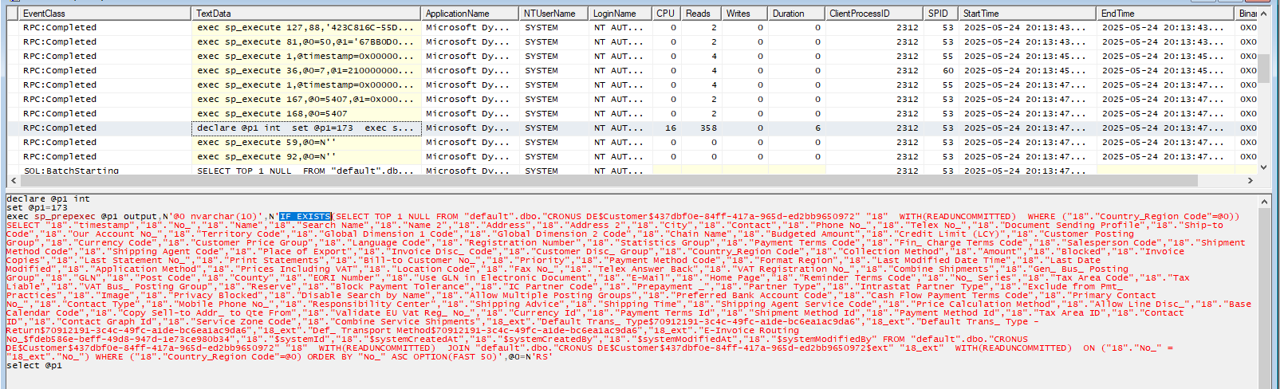
After optimized query, the platform already applies the IF EXISTS logic dynamically. Means that explicitly calling IsEmpty before FindSet is unnecessary.
Full query execution looks like this:
Summary
Avoid using if not IsEmpty then FindSet, as Business Central optimizes FindSet at the runtime level. This approach eliminates redundant queries, improves performance, and ensures cleaner code.